
EPA Temporarily Eases R-410A Installation Ban Amid Industry Concerns |
Contractors and distributors granted reprieve as EPA deprioritizes enforcement of upcoming R-410A installation restrictions. |
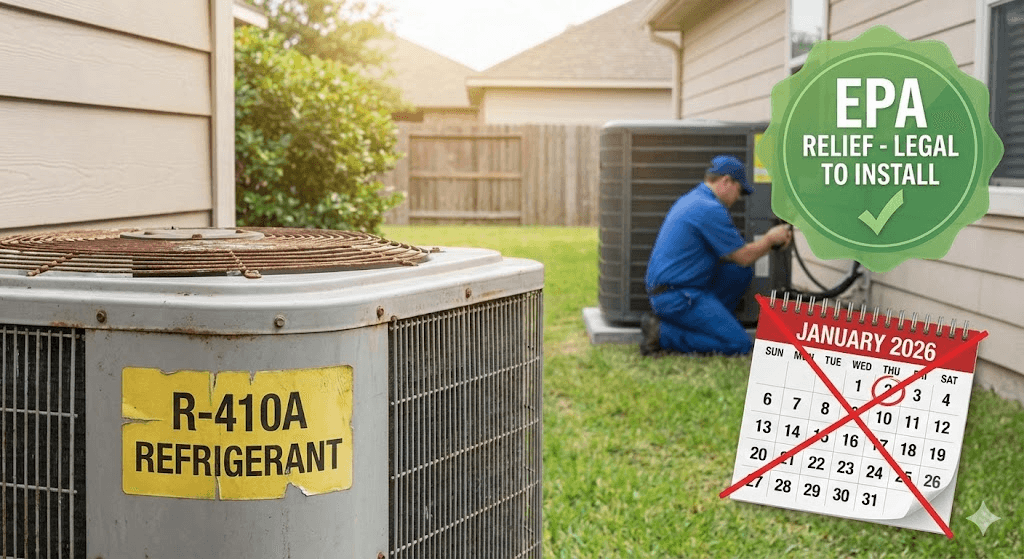
The Environmental Protection Agency (EPA) has announced a temporary shift in its enforcement priorities regarding the installation of R-410A residential and light commercial air conditioning systems.
While the January 1, 2026, ban on installing such equipment remains officially in place, the EPA has indicated it will not prioritize federal enforcement of this prohibition as it reconsiders the Technology Transitions (TT) rule.
This decision offers temporary relief to contractors and distributors concerned about potential losses from unsellable R-410A inventory.
However, it's crucial to note that this enforcement discretion applies only at the federal level.
State and local authorities may still enforce existing regulations.
For instance, New York State has issued a ruling that supersedes this EPA enforcement change, requiring contractors to continue complying with state-specific regulations.
Additionally, the EPA's enforcement discretion does not extend to Variable Refrigerant Flow (VRF) systems.
These systems still face a January 1, 2027, installation deadline, with components required to be manufactured before January 1, 2026.
Contractors involved in commercial VRF installations should monitor inventory dates closely to ensure compliance.
In light of this temporary relief, contractors are advised to:
1. Install Existing R-410A Inventory: Utilize residential and light commercial R-410A units manufactured before January 1, 2025, without immediate concern for federal enforcement actions.
2. Document Equipment Details: Record the manufacture date and serial numbers of installed units to provide evidence of compliance if questioned in the future.
3. Stay Informed on State Regulations: Be aware of and adhere to state-specific rules, especially in regions like New York where stricter regulations may apply.
4. Prepare for A2L Transition: Begin transitioning to A2L refrigerants by training technicians, updating equipment, and ensuring compliance with upcoming standards.
5. Monitor EPA Updates: Keep abreast of EPA announcements, as the agency plans to issue final guidance on the TT rule in early 2026.
While this enforcement discretion provides temporary relief, it is not a permanent solution.
Contractors should use this period to prepare for the industry's shift to A2L refrigerants and ensure ongoing compliance with both federal and state regulations. |
0 Comments
Join the conversation
Be the first to comment
Share your thoughts above.